
🌐 This guide is also available in English.
Prefer reading in English?
👉 Read: New PCI B.Pharm Syllabus 2026: Complete Analysis, Pros, Cons & Industry Impact
PCI New B.Pharm Syllabus 2026 भारत में pharmacy education के इतिहास का सबसे बड़ा बदलाव माना जा रहा है। अगर आप B.Pharm student हैं, teacher हैं, या फिर अपने बच्चे को pharmacy में admission दिलाने की सोच रहे parent हैं, तो आपने पिछले कुछ हफ्तों में ये लाइन कहीं न कहीं जरूर सुनी होगी – “B.Pharm का syllabus बदल गया है।”
PCI New B.Pharm Syllabus 2026 भारत में फार्मेसी शिक्षा के सबसे महत्वपूर्ण पाठ्यक्रम सुधारों में से एक है। Pharmacy Council of India (PCI) ने इसे National Education Policy (NEP) 2020 के अनुरूप तैयार किया है, ताकि छात्रों को आधुनिक, उद्योग-उन्मुख और कौशल आधारित शिक्षा मिल सके।
इस article में आपको वो सब कुछ मिलेगा जो आपको जानना चाहिए – पुराना syllabus vs नया syllabus, credit structure में फर्क, कौन-कौन से नए subject आए हैं (हां, Python भी शामिल है), internship और research project के नए नियम, और सबसे जरूरी – इसका असर आपके GPAT, M.Pharm और career पर कैसे पड़ेगा। सारी जानकारी सीधे PCI की official website और official notification से ली गई है, ताकि कोई confusion न रहे।
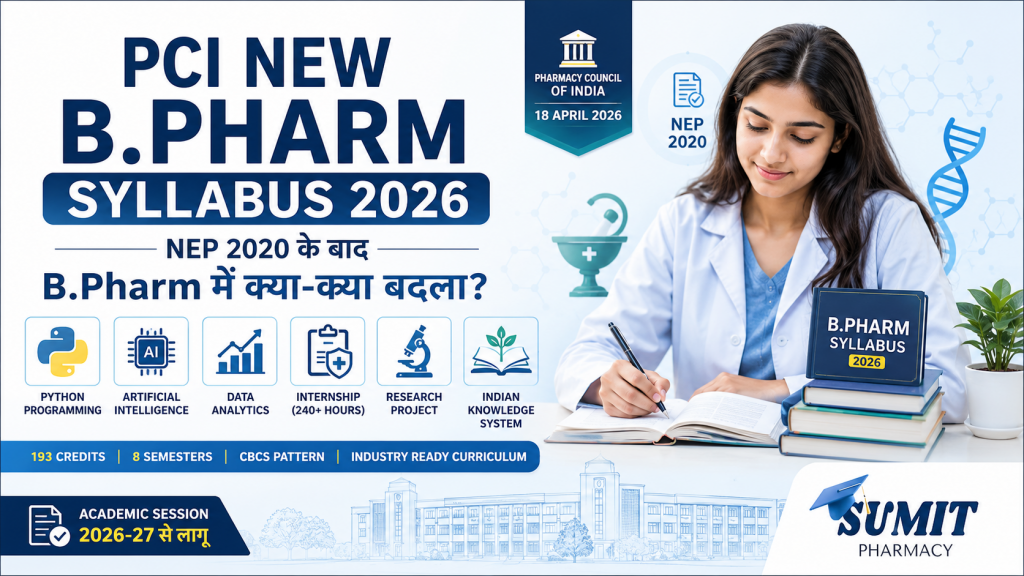
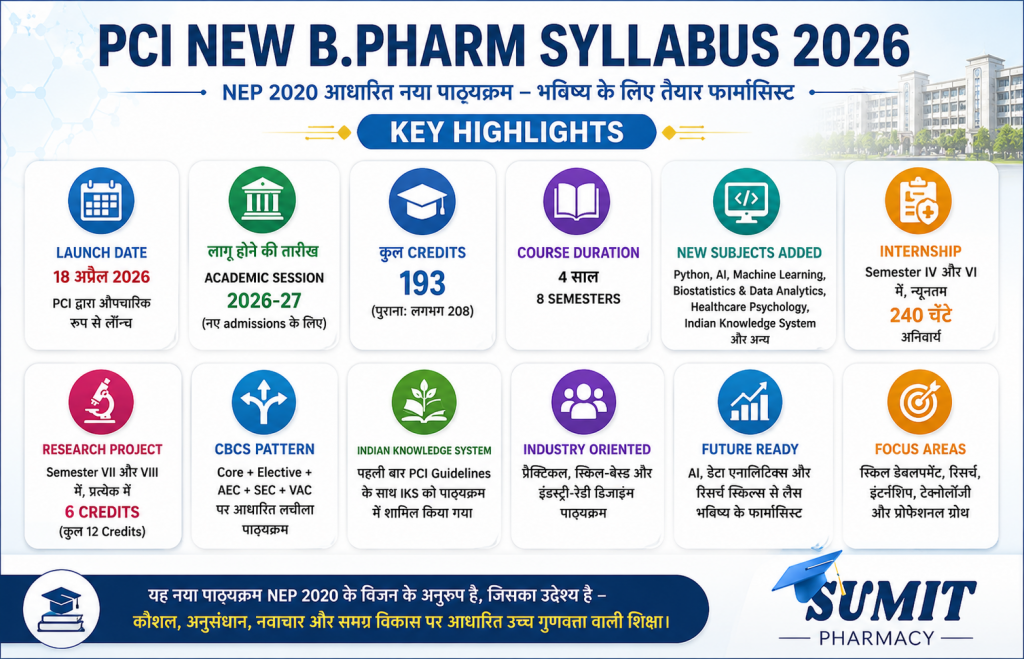
PCI New B.Pharm Syllabus 2026 को Pharmacy Council of India ने National Education Policy 2020 के अनुसार तैयार किया है और इसे 18 अप्रैल 2026 को launch किया गया। यह academic session 2026-27 से नए admission लेने वाले students पर लागू है, जिसमें कुल 193 credits, Python-AI जैसे नए subjects, दो internships (240+ घंटे) और Semester VII-VIII में 12-credit Research Project शामिल है।
📖 In This Guide
- PCI ने syllabus क्यों बदला
- Old vs New Syllabus की पूरी तुलना (Tables के साथ)
- नए Subjects: Python, AI, Biostatistics, Healthcare Psychology, IKS
- Internship और Research Project के नए नियम
- Implementation Timeline (2026-2030)
- यह Syllabus किन Students पर लागू होता है
- GPAT, M.Pharm और Career पर असर
- Common Mistakes जो Students करते हैं
- 22 Frequently Asked Questions
- Official PDF Download और References
Summary Box: 30 सेकंड में पूरी बात समझिए
- PCI ने B.Pharm का नया syllabus NEP 2020 के अनुसार तैयार किया है, जिसे 18 अप्रैल 2026 को औपचारिक रूप से launch किया गया।
- यह syllabus academic session 2026-27 से नए admission लेने वाले students के लिए लागू है।
- जो students पहले से पुराने syllabus (2016-17 से लागू Regulations, 2014 के तहत) में पढ़ रहे हैं, वे अपनी degree पुराने syllabus से ही पूरी करेंगे।
- कुल credits 208 के आसपास से घटकर 193 हो गए हैं, लेकिन practical exposure और बढ़ गया है।
- Semester I से ही Python Programming for Pharmacy एक Ability Enhancement Course (AEC) के रूप में शामिल है।
- Artificial Intelligence, Machine Learning और Biostatistics & Data Analytics को अलग-अलग semesters में जोड़ा गया है।
- Internship अब Semester IV और Semester VI दोनों में है, और graduation तक कम से कम 240 घंटे की internship अनिवार्य है।
- Semester VII और VIII में 6-6 credits का एक structured Research Project रखा गया है।
- Curriculum में पहली बार Indian Knowledge System (IKS) को भी शामिल किया गया है।
Key Highlights Table
| Point | Details |
|---|---|
| Regulatory Body | Pharmacy Council of India (PCI) |
| Policy Framework | National Education Policy (NEP) 2020 |
| Launch Date | 18 अप्रैल 2026 |
| लागू होने की तारीख | Academic Session 2026-27 (नए admissions के लिए) |
| पुराना syllabus कब से लागू था | Academic Session 2016-17 |
| कुल Credits (नया) | 193 |
| कुल Credits (पुराना, अनुमानित) | लगभग 208 |
| Course की अवधि | 4 साल, 8 semesters |
| नए subjects जोड़े गए | Python Programming, AI, Machine Learning, Biostatistics & Data Analytics, Healthcare Psychology, Indian Knowledge System आदि |
| Internship | Semester IV और Semester VI में, न्यूनतम 240 घंटे |
| Research Project | Semester VII और VIII, प्रत्येक में 6 credits |
| Course Category System | Core Course, Elective, AEC, SEC, VAC (CBCS आधारित) |
| Existing Students | पुराने syllabus (2014 Regulations) के तहत ही degree पूरी करेंगे |
PCI ने B.Pharm syllabus क्यों बदला?
ये सवाल हर student के मन में आता है – “जब पुराना syllabus ठीक चल रहा था, तो बदलने की जरूरत क्या थी?”
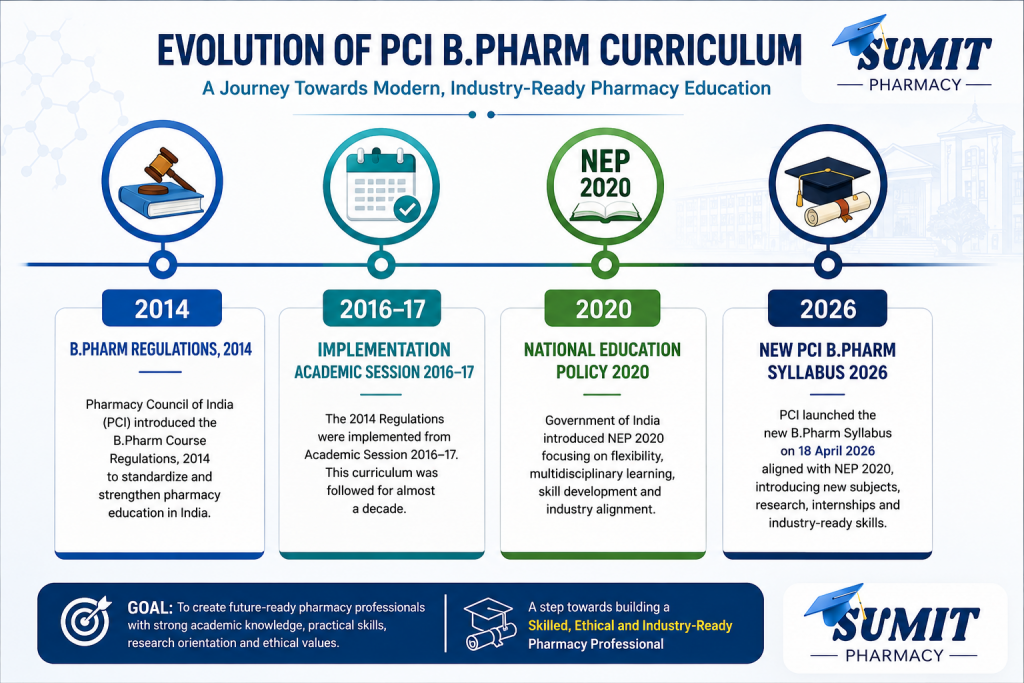
जवाब समझने के लिए थोड़ा पीछे चलते हैं। जो B.Pharm Regulations, 2014 के तहत syllabus अभी तक पढ़ाया जा रहा था, वो academic session 2016-17 से लागू हुआ था। यानी वो curriculum करीब 10 साल पुराना हो चुका था। इन 10 सालों में pharmaceutical industry पूरी तरह बदल गई।
2016 में ज़्यादातर B.Pharm graduates की सोच होती थी – Production, Quality Control, Quality Assurance या फिर medical representative की job। लेकिन आज की तारीख में Regulatory Affairs, Pharmacovigilance, Clinical Research, Medical Writing, Drug Safety, और Healthcare Analytics जैसे field तेजी से grow कर रहे हैं। और इन सभी field में data analysis और digital tools की समझ जरूरी हो गई है।
दूसरी वजह है National Education Policy 2020 खुद। NEP 2020 पूरे भारत के higher education system में flexibility, skill-based learning, research orientation और interdisciplinary पढ़ाई पर जोर देती है। PCI ने अपने official communication में साफ कहा है कि यह revision <cite index=”5-1″>पहले से चली आ रही B.Pharm पाठ्यक्रम की रूपरेखा को शिक्षा के बदलते मानकों के साथ जोड़ने के लिए किया गया है, और यह National Education Policy 2020 के दृष्टिकोण के अनुरूप तैयार किया गया है ताकि छात्र आधुनिक स्वास्थ्य सेवा और फार्मास्युटिकल क्षेत्र की जरूरतों को पूरा कर सकें</cite>।
यही वजह है कि नया syllabus सिर्फ theory पर नहीं, बल्कि practical competencies, research skill, और digital awareness पर ज्यादा फोकस करता है।
PCI New B.Pharm Syllabus 2026 vs Old Syllabus: पूरी तुलना
आइए दोनों syllabus को साथ रखकर समझते हैं कि असल में बदला क्या है।
Credit Structure Comparison
| Parameter | पुराना Syllabus (2014 Regulations) | नया Syllabus (NEP 2020, 2026) |
|---|---|---|
| कुल Credits | लगभग 208 | 193 |
| Structure | Fixed, rigid | CBCS आधारित, flexible |
| Elective Options | बहुत सीमित | Multiple options (Core + Elective + AEC + SEC + VAC) |
| Technology Subjects | लगभग नहीं के बराबर | Python, AI, ML, Data Analytics |
| Internship | एक बार, Practice School के रूप में | दो बार – Semester IV और VI, कुल न्यूनतम 240 घंटे |
| Research Component | अलग से dedicated project नहीं | Semester VII-VIII में 6+6 credits का Research Project |
| Indian Knowledge System | शामिल नहीं था | अलग से PCI guidelines के साथ शामिल |
ध्यान दें: Credits कम दिखने का मतलब workload कम होना नहीं है। Theory की मात्रा जरूर घटी है, लेकिन practical, internship और project-based learning का हिस्सा बढ़ गया है। इसलिए असल जिंदगी में students को यह syllabus पहले से ज्यादा hands-on और demanding लग सकता है।
Course Categories: क्या बदला
पुराने syllabus में लगभग सभी students एक जैसे subjects पढ़ते थे। नए syllabus में CBCS (Choice Based Credit System) की वजह से courses कई categories में बंटे हैं:
| Category | पूरा नाम | Focus |
|---|---|---|
| Core Course | अनिवार्य विषय | Pharmacy की मूल जानकारी (Pharmaceutics, Pharmacology, Pharmaceutical Chemistry आदि) |
| Elective | वैकल्पिक विषय | Student की career दिशा के अनुसार चुनाव (जैसे Cosmetic Science, Pharmacovigilance) |
| AEC (Ability Enhancement Course) | क्षमता वृद्धि विषय | Communication, professional skills, Python Programming |
| SEC (Skill Enhancement Course) | कौशल वृद्धि विषय | Practical tools और technical applications |
| VAC (Value Added Course) | मूल्य वर्धित विषय | Entrepreneurship, emerging technologies |
अगर आप पुराने syllabus के semester-wise subjects और unit-wise notes देखना चाहते हैं, तो हमारे 1st Semester B.Pharma Syllabus से लेकर 8th Semester B.Pharma Syllabus तक सभी semester के official PCI syllabus PDF हमारी website पर पहले से उपलब्ध हैं।
नए Syllabus में जुड़े Major Subjects और Changes
1. Python Programming for Pharmacy
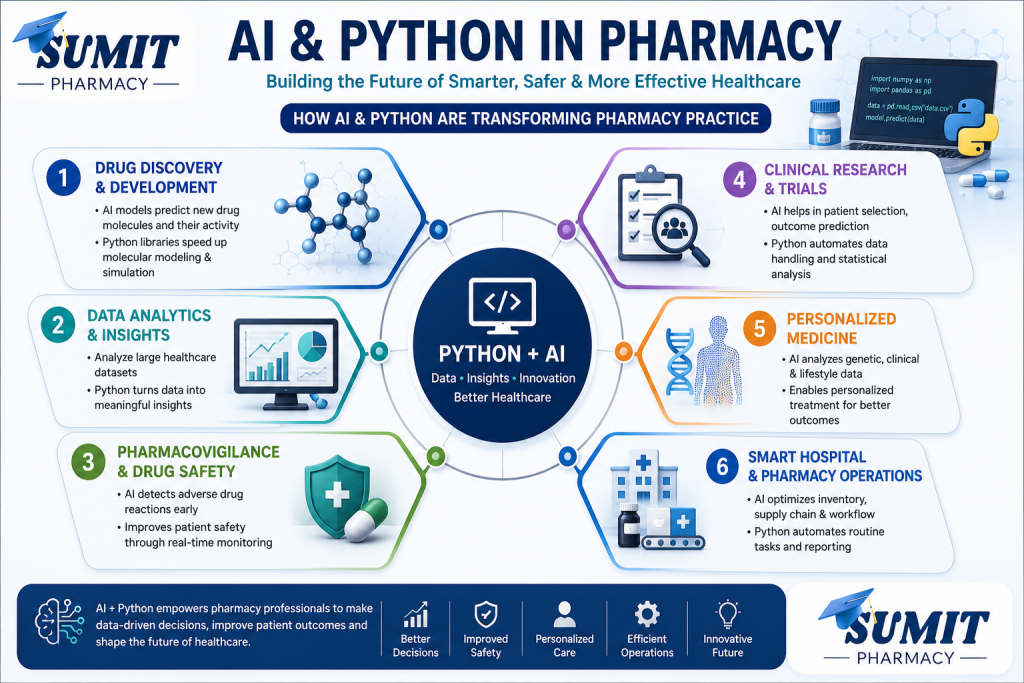
सबसे ज्यादा चौंकाने वाला बदलाव यही है। Semester I से ही students को Python Programming पढ़ाई जाएगी, जो एक Ability Enhancement Course (AEC) की तरह मौजूद है। कई students का पहला रिएक्शन होता है – “एक pharmacist को coding क्यों सीखनी चाहिए?”
जवाब सीधा है – healthcare industry अब data-driven हो चुकी है। Clinical research, pharmacovigilance और healthcare analytics जैसे field में basic data-handling की समझ रखने वाले candidates को प्राथमिकता मिलती है। इसका मतलब यह बिल्कुल नहीं है कि आप 3-4 महीने Python पढ़कर software engineer बन जाएंगे। मकसद है – आपको technology-driven healthcare system में सहज बनाना।
Practical Example: मान लीजिए एक pharmacovigilance associate को हर महीने हजारों adverse drug reaction (ADR) reports में से patterns ढूंढने होते हैं। अगर उसे basic Python data-handling आती है, तो वो Excel में घंटों लगाने वाला काम कुछ मिनटों में कर सकता है। यही practical value है जो PCI इस subject से देना चाहता है।
2. Artificial Intelligence (AI) और Machine Learning (ML)
Drug discovery, personalized medicine, disease prediction, और pharmacovigilance में AI का इस्तेमाल तेजी से बढ़ रहा है। PCI चाहता है कि आने वाली पीढ़ी के pharmacists इन developments को कम-से-कम समझ तो सकें, भले ही उनका daily काम इससे सीधे न जुड़ा हो। शुरुआत में इसका असर Production, QA, QC जैसी traditional job roles पर सीमित रहेगा, लेकिन अगले कुछ सालों में यह exposure ज्यादा value दिखाएगा।
3. Biostatistics और Data Analytics
यह subject देखने में उतना exciting नहीं लगता, लेकिन असल में यह सबसे practical addition है। हर clinical trial, हर research paper, और हर drug approval process statistics पर टिका होता है। जो students GPAT, M.Pharm, Clinical Research या Regulatory Affairs की तरफ जाना चाहते हैं, उनके लिए यह subject foundation का काम करेगा।
4. Healthcare Psychology
यह subject कम discuss होता है, लेकिन इसकी importance कम नहीं है। एक healthcare professional रोज patients से मिलता है। Patient behaviour, communication, और treatment adherence को समझना patient-centered care के लिए जरूरी है।
5. Indian Knowledge System (IKS)
नए syllabus की एक और खासियत यह है कि PCI ने अलग से <cite index=”5-1″>”Guidelines for Integrating Indian Knowledge System in B.Pharm Syllabus”</cite> जारी की हैं। यानी traditional भारतीय ज्ञान परंपरा (जैसे आयुर्वेदिक फार्मास्युटिकल concepts) को भी आधुनिक pharmacy education के साथ जोड़ने की कोशिश की गई है। यह NEP 2020 के उस उद्देश्य को दर्शाता है जिसमें भारतीय ज्ञान परंपरा को mainstream education में शामिल करने की बात कही गई है।
Internship के नए नियम: सबसे practical बदलाव
मेरी नज़र में पूरे नए syllabus का सबसे असरदार हिस्सा internship reform है। पुराने syllabus में students सिर्फ एक बार Practice School या industrial training करते थे, और उसकी quality college-to-college अलग-अलग होती थी।
नए syllabus में:
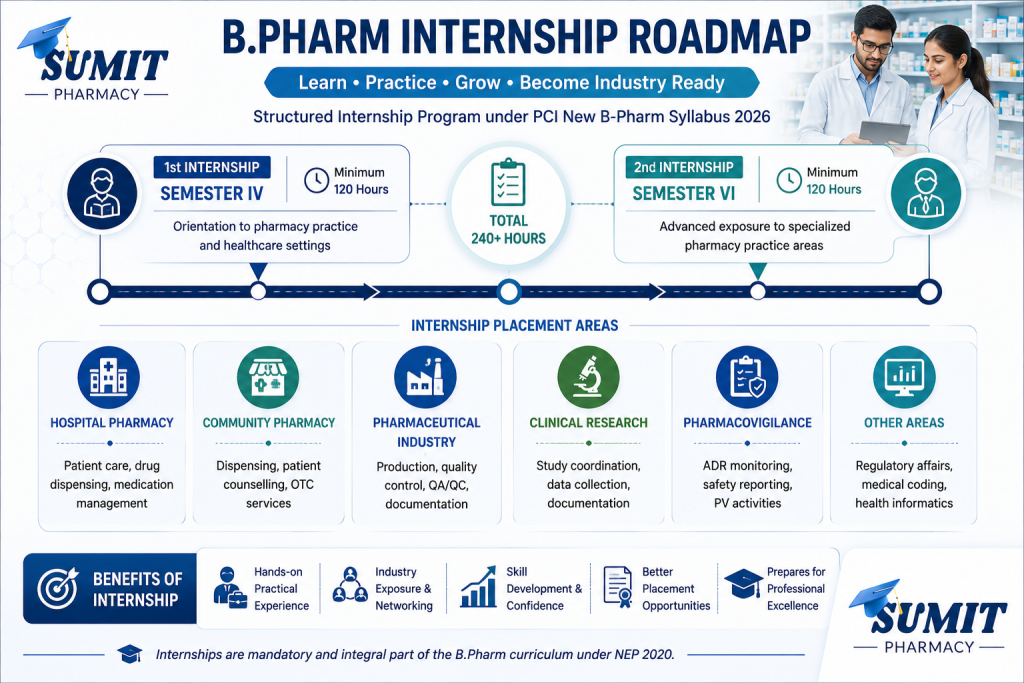
- Internship I – Semester IV में, जिसमें community pharmacy और healthcare setting का exposure मिलता है।
- Internship II – Semester VI में, जिसमें advanced clinical और industry-level training होती है।
- कुल मिलाकर graduation तक न्यूनतम 240 घंटे की internship अनिवार्य है।
इसका सीधा फायदा यह है कि students को classroom में सिर्फ concept नहीं मिलेगा, बल्कि GMP documentation, quality assurance प्रक्रिया और hospital pharmacy practice जैसी चीजें सीधे workplace पर देखने-समझने का मौका मिलेगा।
Expert Tip: अगर आप third या fourth year में हैं, तो अपनी internship को हल्के में मत लीजिए। जो students internship के दौरान genuinely सीखने की कोशिश करते हैं, placement के समय वही सबसे आगे निकलते हैं।
Research Project: Semester VII-VIII
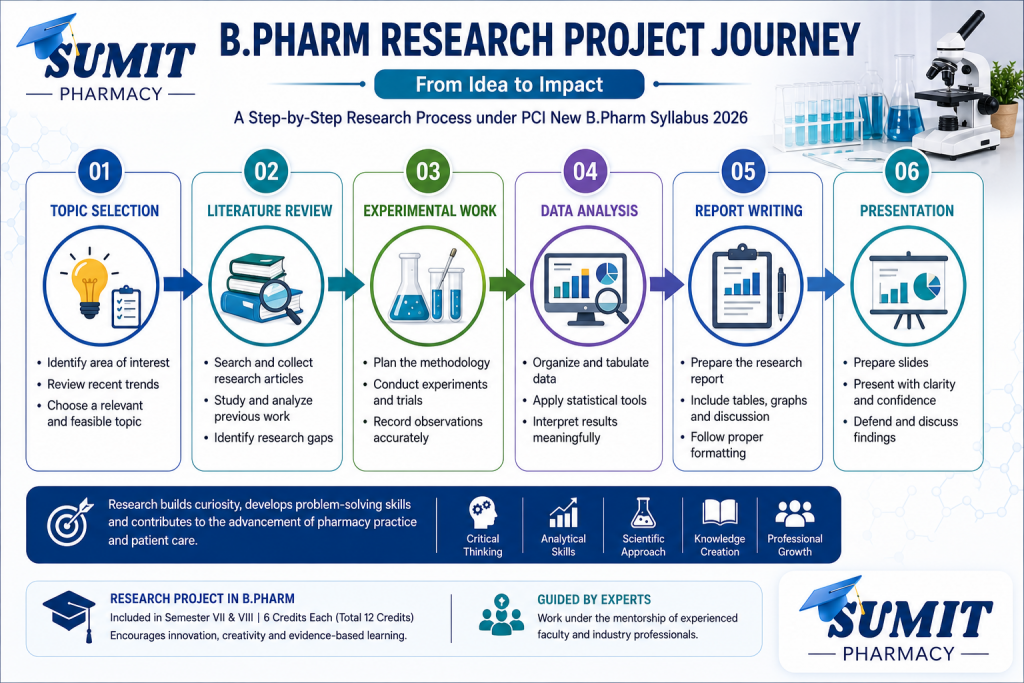
नए curriculum में Semester VII और VIII में एक structured Research Project रखा गया है, हर semester में 6 credits के साथ – यानी कुल 12 credits सिर्फ research के लिए। पहले ज्यादातर B.Pharm students बिना किसी serious research experience के graduate हो जाते थे।
इस बदलाव का सबसे बड़ा फायदा उन students को मिलेगा जो आगे M.Pharm या PhD करना चाहते हैं, क्योंकि postgraduate level पर research methodology, literature review और scientific writing को लेकर सबसे ज्यादा दिक्कत नए students को होती है। यह project उस gap को कम करने की कोशिश है।
Practical Example: एक 8th semester student जिसने अपने research project में किसी herbal drug के extraction और standardization पर काम किया हो, उसे M.Pharm में entrance interview के दौरान research aptitude दिखाना आसान होगा, बजाय उस student के जिसने कभी कोई structured project नहीं किया।
यह Syllabus किन Students पर लागू होता है? (Who Should Follow This)
| Student Category | कौन सा Syllabus लागू होगा |
|---|---|
| 2026-27 में नया admission लेने वाले First Year Students | नया PCI Syllabus (NEP 2020, 193 credits) |
| पहले से 2nd, 3rd, 4th Year में पढ़ रहे Students | पुराना Syllabus (Regulations, 2014) – degree पूरी होने तक |
| Lateral Entry Students (Diploma के बाद Direct 2nd Year) | College और university की guideline के अनुसार, generally नए syllabus के हिसाब से समकक्ष credit दिए जाते हैं |
| Repeat/Backlog Students (पुराने batch के) | पुराने syllabus के तहत ही परीक्षा और मूल्यांकन जारी रहेगा |
अगर आप confuse हैं कि आपका syllabus कौन सा लागू होगा, तो अपने college की academic office से लिखित पुष्टि जरूर लें, क्योंकि हर university का transition plan थोड़ा अलग हो सकता है।
पुराना Syllabus पूरी तरह खत्म हो गया है क्या?
नहीं। यह सबसे ज्यादा पूछा जाने वाला सवाल है और इसका जवाब बहुत clear है।
- जो students 2026-27 से पहले admission ले चुके हैं, वे अपनी degree पुराने syllabus (Regulations, 2014) के तहत ही पूरी करेंगे।
- नया syllabus सिर्फ 2026-27 सत्र से नए admission लेने वाले First Year students पर लागू होगा।
- College और university दोनों को PCI की तरफ से निर्देश दिया गया है कि वे इस implementation को समय पर पूरा करें।
अगर आप अभी 2nd, 3rd या 4th year में हैं, तो घबराने की जरूरत नहीं – आपका syllabus नहीं बदलेगा। अगर आप नए admission ले रहे हैं (2026-27 batch), तो यही नया syllabus आपका होगा।
GPAT, M.Pharm और Job पर असर
GPAT Preparation पर असर
नया syllabus सीधे तौर पर GPAT का syllabus नहीं बदलता, लेकिन इसका indirect असर जरूर पड़ेगा। Biostatistics, Data Analytics और Research Project जैसे components concept की गहराई बढ़ाते हैं, जिससे scientific reading और analytical thinking बेहतर होती है – और यह दोनों skill competitive exams में काम आती हैं। साथ ही, students को अब academics, internship और project के बीच समय बांटना सीखना होगा, जो एक नई चुनौती है।
M.Pharm और Higher Education पर असर
Research Project और internship experience की वजह से postgraduate की तैयारी पहले से बेहतर हो सकती है। जो students research design, literature review और data interpretation में पहले से थोड़ा familiar होंगे, उन्हें M.Pharm में adjust होने में आसानी होगी।
Career और Job Opportunities पर असर
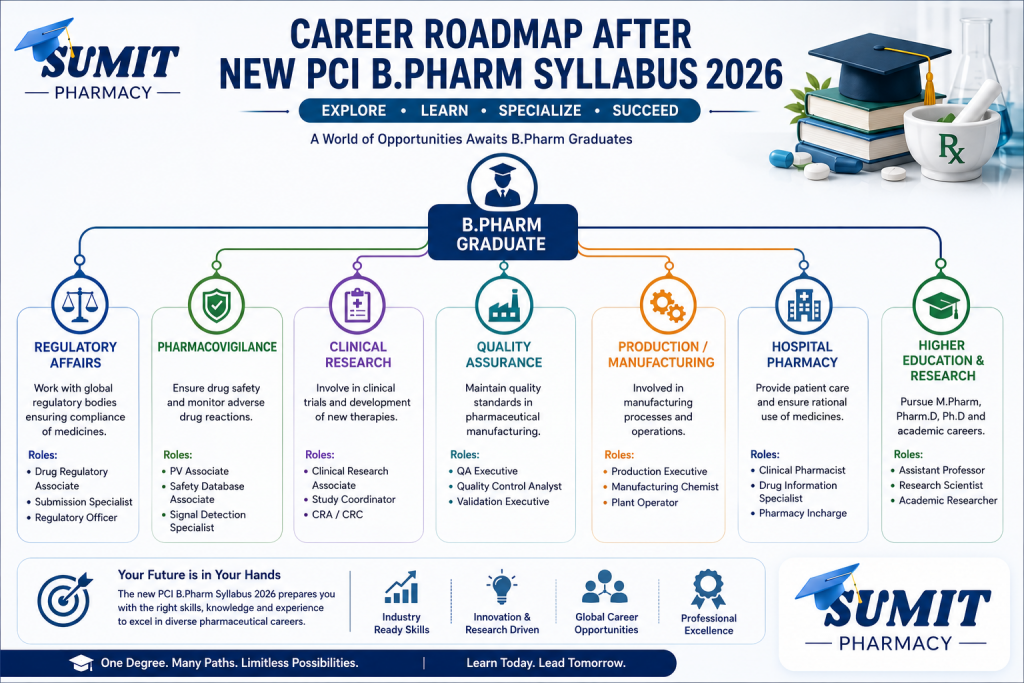
| Career Field | संभावित असर |
|---|---|
| Regulatory Affairs | High – documentation, research और data की समझ बढ़ेगी |
| Pharmacovigilance | High – data analytics और research skill सीधे काम आएंगे |
| Clinical Research | High – biostatistics और research methodology की नींव मिलेगी |
| Quality Assurance (QA) | Moderate – internship से documentation exposure बेहतर होगा |
| Quality Control (QC) | Moderate – college की lab infrastructure पर निर्भर |
| Production | Moderate – internship से GMP का practical exposure मिलेगा |
| Community Pharmacy | Moderate |
| Sales & Marketing | सीमित तत्काल असर |
अगर आप Regulatory Affairs में करियर बनाना चाहते हैं, तो हमारा विस्तृत Regulatory Affairs Career Guide जरूर पढ़ें – वहां career path, जरूरी skills और opportunities की पूरी जानकारी दी गई है।
College और Faculty के लिए चुनौतियां
Student का नजरिया अलग होता है, लेकिन college के लिए यह बदलाव आसान नहीं है। नए subjects पढ़ाने के लिए Computer Lab, updated software, और trained faculty चाहिए। ज्यादातर pharmacy faculty अभी तक Pharmaceutics, Pharmacology, Pharmaceutical Chemistry जैसे traditional क्षेत्रों में expert हैं – Python या AI पढ़ाना उनके लिए भी नया अनुभव होगा।
इसीलिए, नए syllabus की सफलता सिर्फ document पर निर्भर नहीं करती, बल्कि इन चार बातों पर टिकी है:
- College की infrastructure तैयारी
- Faculty training और development
- Industry के साथ collaboration (खासकर internship के लिए)
- Student की खुद की सक्रियता और मेहनत
टॉप colleges इसे जल्दी adapt कर लेंगे, लेकिन छोटे और resource-limited colleges में implementation में समय लग सकता है।
Common Mistakes जो Students करते हैं (और बचें कैसे)
नए syllabus को लेकर students कुछ आम गलतियां करते हैं। इन्हें समय रहते समझ लेना फायदेमंद रहेगा:
- गलती 1: यह सोचना कि Python सीखने से आप coder बन जाएंगे। असल मकसद digital awareness है, software development नहीं।
- गलती 2: Internship को सिर्फ “attendance पूरी करने” का जरिया समझना। जो student internship के दौरान active होकर सीखता है, वही placement में आगे निकलता है।
- गलती 3: Research Project को आखिरी हफ्ते में जल्दबाजी में पूरा करना। शुरुआत से planning करने पर project की quality और सीखना दोनों बेहतर होते हैं।
- गलती 4: यह मान लेना कि credits कम होने का मतलब पढ़ाई आसान हो गई है। Practical workload पहले से ज्यादा हो सकता है।
- गलती 5: college से syllabus को लेकर confirm न करना। हमेशा अपने college की academic office से यह पक्का करें कि आप किस syllabus (पुराना या नया) के तहत पढ़ रहे हैं।
Expert Tips: Students क्या करें अभी?
- First Year students: शुरुआत से ही communication skills और basic digital literacy पर ध्यान दें, क्योंकि AEC/SEC courses इसी पर आधारित हैं।
- Second Year students: Excel, basic statistics और research के fundamentals समझना शुरू कर दें, ताकि आगे Biostatistics subject आसान लगे।
- Third Year students: Internship को seriously लें – यही सबसे बड़ा differentiator साबित होगा।
- Final Year students: एक अच्छा resume और research project portfolio तैयार करें, जो placement और higher education दोनों में काम आएगा।
- GPAT aspirants: Time-management सीखें, क्योंकि अब academics के साथ internship और project भी manage करने होंगे।
Old vs New: एक नज़र में पूरी तस्वीर
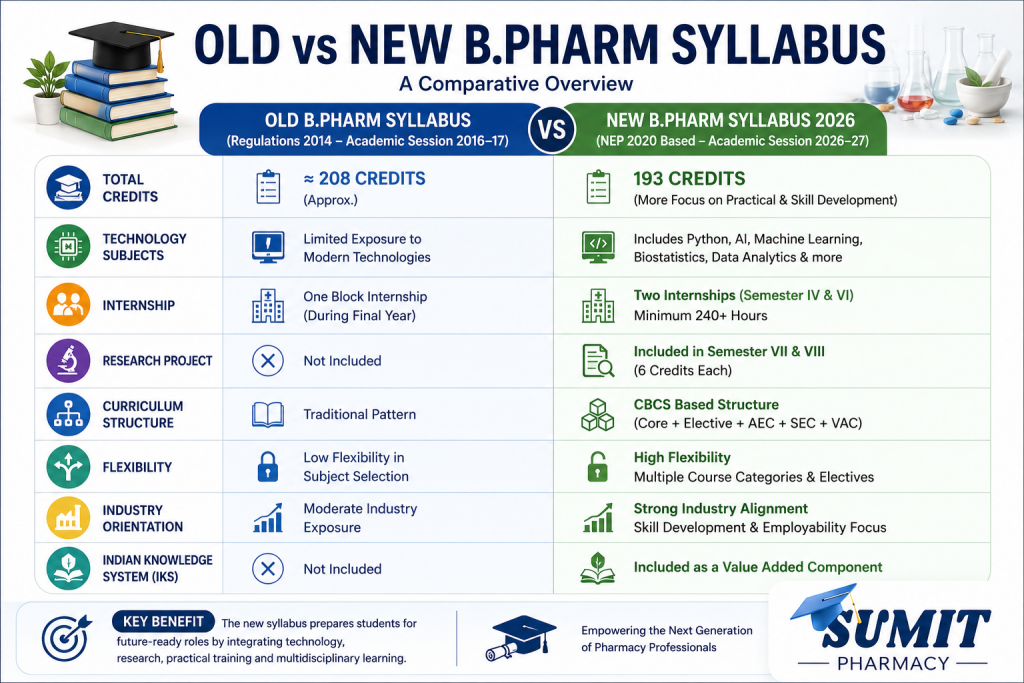
| Aspect | Old B.Pharm Syllabus (2014 Regulations) | New B.Pharm Syllabus (NEP 2020, 2026) |
|---|---|---|
| लागू होने का साल | 2016-17 | 2026-27 |
| Total Credits | ~208 | 193 |
| Technology Exposure | नगण्य | Python, AI, ML, Data Analytics |
| Internship | एक बार | दो बार (Sem IV और VI), न्यूनतम 240 घंटे |
| Research Component | अलग से नहीं | Sem VII-VIII, 12 credits |
| Flexibility | Fixed subjects | CBCS – Core + Elective + AEC + SEC + VAC |
| Indian Knowledge System | शामिल नहीं | अलग guidelines के साथ शामिल |
| Focus | Theory-heavy | Practical + Research + Industry-oriented |
Official PCI Syllabus PDF Download
नया B.Pharm Syllabus (NEP 2020, 2026) PCI की official website पर उपलब्ध है। Students, faculty और college administration इसे सीधे वहां से download कर सकते हैं:
पुराने syllabus (Regulations, 2014) के semester-wise subject PDFs और unit-wise notes आपको हमारी website पर B.Pharmacy Syllabus Section में मिल जाएंगे।
Frequently Asked Questions (FAQs)
1. PCI New B.Pharm Syllabus 2026 क्या है? यह Pharmacy Council of India द्वारा National Education Policy 2020 के अनुसार तैयार किया गया नया B.Pharm curriculum है, जो academic session 2026-27 से लागू है।
2. यह नया syllabus कब से लागू होगा? यह academic session 2026-27 से नए admission लेने वाले First Year students के लिए लागू है।
3. क्या पुराने syllabus में पढ़ रहे students को भी यह नया syllabus पढ़ना होगा? नहीं। जो students पहले से 2014 Regulations के तहत पढ़ रहे हैं, वे अपनी degree पुराने syllabus से ही पूरी करेंगे।
4. नए syllabus में कुल कितने credits हैं? नए syllabus में कुल 193 credits हैं, जबकि पुराने syllabus में यह लगभग 208 के आसपास थे।
5. क्या B.Pharm में अब Python Programming पढ़ाई जाएगी? हां। Semester I से ही Python Programming for Pharmacy एक Ability Enhancement Course (AEC) के रूप में शामिल है।
6. क्या AI और Machine Learning भी syllabus में शामिल हैं? हां, Artificial Intelligence और Machine Learning को अलग-अलग semesters में जोड़ा गया है ताकि students इनके healthcare applications समझ सकें।
7. नए syllabus में internship के नियम क्या हैं? Internship अब दो चरणों में होगी – Semester IV और Semester VI में, और graduation तक न्यूनतम 240 घंटे की internship अनिवार्य है।
8. क्या नए syllabus में research project भी शामिल है? हां, Semester VII और VIII में एक structured Research Project है, हर semester में 6 credits के साथ, यानी कुल 12 credits।
9. AEC, SEC और VAC का क्या मतलब है? AEC यानी Ability Enhancement Course (communication और professional skills), SEC यानी Skill Enhancement Course (practical/technical tools), और VAC यानी Value Added Course (entrepreneurship, emerging technologies)।
10. क्या नया syllabus GPAT को प्रभावित करेगा? सीधे तौर पर GPAT syllabus नहीं बदलता, लेकिन Biostatistics और Research Project जैसे components से analytical thinking बेहतर हो सकती है, जो competitive exams में मदद करती है।
11. क्या नया syllabus M.Pharm की तैयारी में मदद करेगा? हां, Research Project और internship experience की वजह से research methodology और data interpretation में पहले से exposure मिल जाता है, जिससे M.Pharm में transition आसान हो सकता है।
12. Indian Knowledge System (IKS) syllabus में क्यों जोड़ा गया? NEP 2020 के तहत भारतीय पारंपरिक ज्ञान को mainstream education से जोड़ने के उद्देश्य से PCI ने IKS के लिए अलग guidelines जारी की हैं।
13. क्या नया syllabus पुराने syllabus से ज्यादा मुश्किल है? Credits कम होने के बावजूद, internship, project और practical components बढ़ने से workload पहले से ज्यादा demanding महसूस हो सकता है।
14. नए syllabus का असर किन career fields पर सबसे ज्यादा पड़ेगा? Regulatory Affairs, Pharmacovigilance, Clinical Research और Research & Development जैसे fields को इससे सबसे ज्यादा फायदा मिलने की संभावना है।
15. क्या हर college नए syllabus को सही तरीके से लागू कर पाएगा? यह college की infrastructure, faculty training और industry collaboration पर निर्भर करेगा। टॉप colleges इसे बेहतर तरीके से implement कर सकते हैं, जबकि resource-limited colleges में समय लग सकता है।
16. नए syllabus की official PDF कहां से मिलेगी? Official syllabus PCI की website (pci.gov.in) पर उपलब्ध है, जहां से इसे सीधे download किया जा सकता है।
17. क्या B.Pharm अब B.Tech जैसा हो गया है क्योंकि इसमें Python और AI जुड़ गए हैं? नहीं। Technology subjects सिर्फ एक छोटा हिस्सा हैं। B.Pharm का core अभी भी Pharmaceutics, Pharmacology, Pharmaceutical Chemistry और Pharmacognosy पर ही आधारित है।
18. क्या Lateral Entry students (Diploma के बाद direct 2nd year) पर भी नया syllabus लागू होगा? यह college और university की transition policy पर निर्भर करता है। आमतौर पर उन्हें समकक्ष credit के आधार पर नए syllabus में समायोजित किया जाता है, लेकिन पुष्टि के लिए अपने college से जरूर संपर्क करें।
19. अगर मैं किसी विषय में backlog/repeat student हूं, तो कौन सा syllabus लागू होगा? Backlog students आमतौर पर उसी syllabus के तहत परीक्षा देते रहते हैं जिसमें उन्होंने पहले admission लिया था, जब तक college अलग guideline जारी न करे।
20. नए syllabus में कितने नए subjects जोड़े गए हैं? अलग-अलग reports के अनुसार करीब 21 नए subjects/components जोड़े गए हैं, जिनमें AI/Data Science से जुड़े subjects, दो internships, दो research-project semesters, और pharmacovigilance, regulatory affairs, entrepreneurship, ethics व management से जुड़े विषय शामिल हैं। सटीक संख्या के लिए हमेशा official PCI PDF देखें।
21. क्या नया syllabus सिर्फ भारत के सरकारी कॉलेजों में लागू होगा या private colleges में भी? PCI द्वारा approved सभी institutions (सरकारी और private दोनों) पर यह नया syllabus लागू होता है, क्योंकि यह Pharmacy Act के तहत जारी एक regulatory निर्देश है।
22. क्या नए syllabus के लागू होने से B.Pharm की fees बढ़ सकती हैं? Syllabus खुद fees तय नहीं करता, लेकिन नई infrastructure (computer labs, software, आदि) की जरूरत की वजह से कुछ colleges अपनी fee structure में बदलाव कर सकते हैं। यह पूरी तरह college-specific निर्णय है।
Related Articles on Sumit Pharmacy
Official References
- Pharmacy Council of India – Syllabus: Bachelor of Pharmacy (B.Pharm) 2026 As Per NEP 2020
- Pharmacy Council of India – Implementation of New B.Pharm Syllabus from Academic Session 2026-27 (Official Notification)
- Ministry of Education, Government of India – National Education Policy 2020
निष्कर्ष (Conclusion)
PCI New B.Pharm Syllabus 2026 सिर्फ एक syllabus revision नहीं, बल्कि भारत में pharmacy education की दिशा बदलने वाला कदम है। Python, AI, Biostatistics जैसे subjects, दो internships, और Semester VII-VIII का structured Research Project – ये सब मिलकर students को ज्यादा practical, research-oriented और industry-ready बनाने की कोशिश करते हैं।
लेकिन सिर्फ अच्छा syllabus document होना काफी नहीं है। असली फर्क तब पड़ेगा जब students internship को गंभीरता से लेंगे, research project में genuinely कुछ सीखेंगे, और नए subjects को सिर्फ पास होने के लिए नहीं, बल्कि समझने के लिए पढ़ेंगे। अगर ऐसा हो पाया, तो यह नया syllabus career के लिए वाकई गेम-चेंजर साबित हो सकता है।
Disclaimer: यह article केवल शैक्षणिक और सूचना उद्देश्यों के लिए है। यह जानकारी Pharmacy Council of India (PCI) की official website और official notifications पर आधारित है। किसी भी academic या admission संबंधी फैसले से पहले कृपया अपने college, university या PCI की official website (pci.gov.in) से नवीनतम जानकारी अवश्य verify कर लें, क्योंकि नियमों में समय-समय पर बदलाव हो सकता है।
Prepared by: Sumit Pharmacy – Pharmacy Education, Career Guidance & Industry Insights